The Missing Link Roundup

Standard
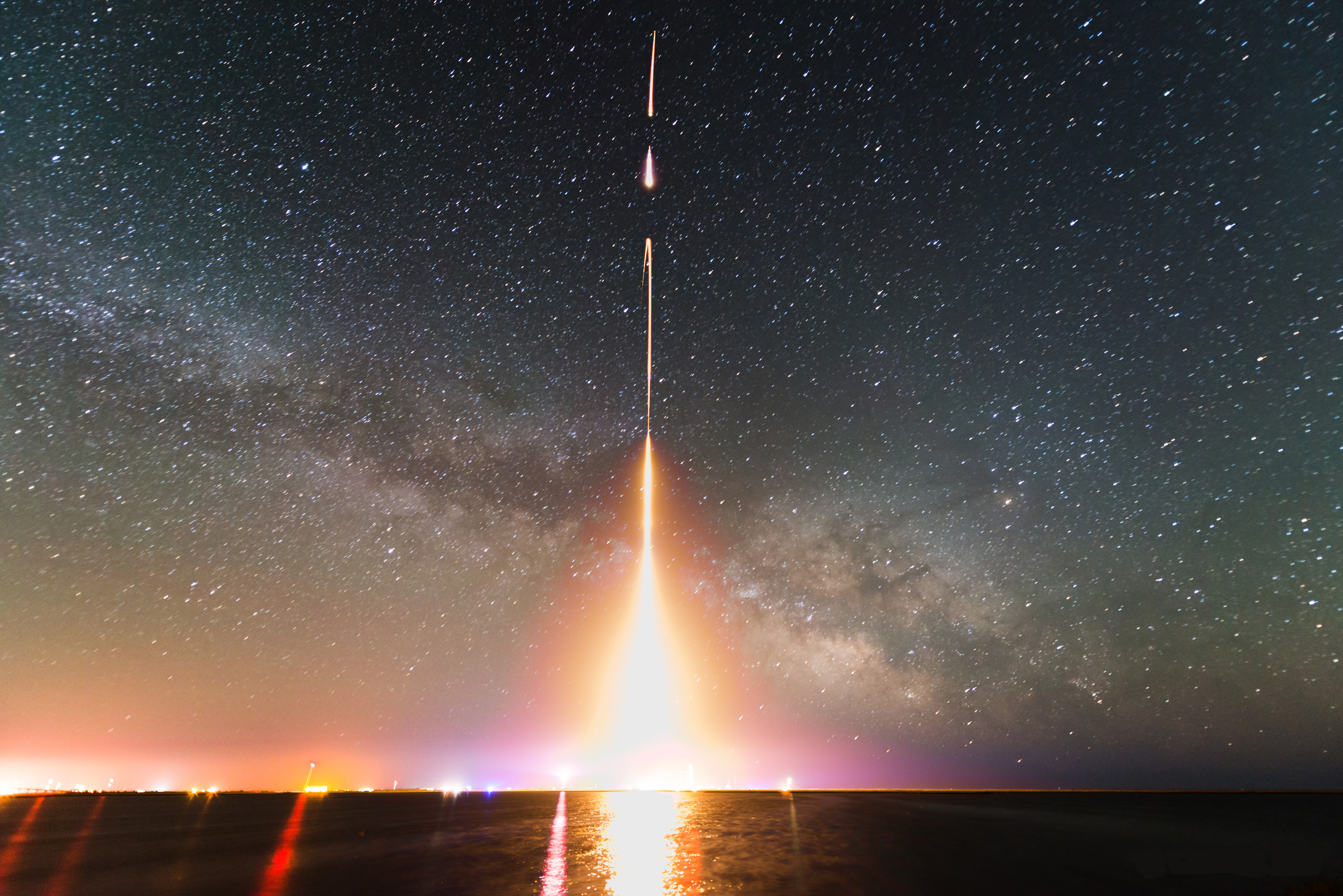
Time-lapse of the Cosmic Infrared Background Experiment (CIBER) rocket launch, at NASA's Wallops Flight Facility in Virginia in 2013

Time-lapse of the Cosmic Infrared Background Experiment (CIBER) rocket launch, at NASA’s Wallops Flight Facility in Virginia in 2013

NASA launched CIBER in 2010 and 2012, so far it has already completely changed how we view galaxies. Instead of forming an absolute boundary of stars, CIBER is teaching us that as many as half of all stars may lie outside of galaxies, and maybe galaxies are more like an interconnected sea of stars. — NASA

We don’t really know what dark matter is, but current theory says it makes up 27% of the universe. So what DO we know? That dark energy seems to be increasing through an exchange with dark matter, but we have no idea why. — ScienceDaily

On October 19, 2014 Comet Siding Spring flew really closely by Mars, and scientists have since been analyzing all the data points. The article also includes a short video of the Comet.– NBCNews
The Missing Link Roundup

Standard
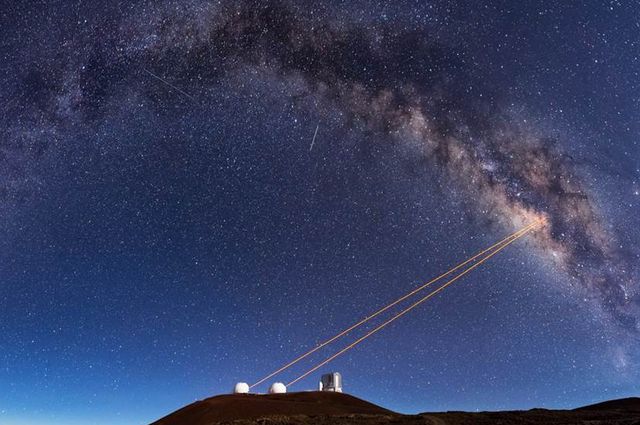
The Keck Observatory looks at G2

The Keck Observatory looks at G2

G2 survived a close encounter with the super-massive black hole at the center of the Milky Way galaxy. Now scientists are wondering if the gas cloud could actually be a pair of binary stars that have merged. — EarthSky and Escapist

How cool is this shit? Astronomers mapped the entire local universe (out to a distance of 380 million light-years) in 3-D. While they completed this three years ago, it’s news to me! — Harvard-Smithsonian

NASA’s Fermi Gamma-ray Space Telescope found a bunch of high-energy blasts from a highly magnetized neutron star (aka a magnetar). Now astronomers have discovered seismic activity rippling throughout the magnetar. STARQUAKE! — NASA